"Why can't we read books we like?"
This
all-too-common question in the English classroom has been asked of me
numerous times by high school students, most recently a freshmen who eyed with suspicion the text Lord of the Flies. Though she wasn't my student - her class followed
mine - we often talked with several of her friends before class, and I
could tell she was bright and motivated but still viewed the world as a
child. In talking about what she "liked," we veered into discussion of
John Green's The Fault in Our Stars - an amazing young adult
novel that has moved onto some very credible lists as one of best books
of the year. The student "loved the novel" and thought it would be
great to discuss in class. I asked her a few questions regarding her
reading. "Was the book tough to read?" Of course not. "Did you struggle with the sentences or the vocabulary?" Are you crazy. "Did it challenge you in any way?" Well, it was really sad ... but I loved it. And that is the issue.
So,
what makes it worthy of study? Far too often these days students and
parents and, surprisingly, English teachers are confusing the pleasure
reading with the study of literature. They are not the same thing.
They do not belong in the same venue. The pleasure of reading is not
in any standard of education. It is not the public's mandate. It is
not our job. Appreciation, on the other hand, is.
In the past couple years,
that issue has risen in our English department as some teachers questioned the school's policy of summer reading. For many
years, honors English students have been asked to read books like John
Knowles' A Separate Peace and Alan Patton's Cry, the Beloved Country during
the summer. And teachers have struggled with students reading a book
"they hate." Thus, they have argued for offering a book that students
can just enjoy, and books like John Green's The Fault in Our Stars have been
offered as alternatives in the past. For the record, John Green is a fantastic author, I
have read all his books, and I love his work. However, in spite of his
brilliance and his use of the word metaphor and allusion, Green's work
is not a work of classic literature. It is a great book, and I would
recommend it to all my students - in fact, I do. However, to argue that
English teachers should stop reading John Knowles or Alan Paton because
"it's hard" or students "don't like it," and instead shift to the
"study" of a book that for all its brilliance is written at about a
sixth-grade level is ... discouraging.
In response, I look to Carol Jago and her book With Rigor For All: Teaching Classics to Contemporary Students. Jago
actually visited my high school years ago after our principle purchased
copies of her book for the English department. Carol Jago worries that
"in our determination to provide students with literature that they can
relate to we sometimes end up teaching works that students actually
don't need much help with at the expense of teaching classics they most
certainly need assistance negotiating." I share her concerns, yet I
struggle to convince teachers who simply want children to love
literature. While a noble goal, I'd argue that is the very job of the
teacher - helping students appreciate William Golding the same way they
love John Green. At the very least, it's worth noting Carol Jago's
point that "If a student can read a book on their own [and fully "get
it"], it probably isn't the best choice for classroom study. Classroom
texts should pose an intellectual challenge to young readers."
Ultimately, I see a divergence in the goal of English teachers and the
English classroom. And I was, interestingly, steered toward Carol
Jago's work by a teacher who was trying to convince me I was wrong for
opposing the inclusion on John Green in the curriculum.
To
that end, I can only cite Jago who asserts, "While I believe young
adult fiction has a place in the recreational life of teenagers, I don't
think these titles are the best choice when your goal is the study of
literature."
Friday, January 30, 2015


Wednesday, January 28, 2015
Why One Teacher Opposes the PARCC Exam
Mary Ellen Redmond is a veteran teacher in Massachusetts, home of the most highly rated schools in the nation. Schools in the state will begin to administer the PARCC test this spring, even as the number of states supporting PARCC has dwindled from 26 several years ago to only 10 now. And Ms. Redmond would certainly support a withdrawal of her state, as she "cannot support the PARCC exam" and encourages others to voice their concern. To understand her reticence, she explains the serious concerns and criticisms she has of this new test:
These are legitimate and serious concerns. And, all concerned parties, from parents to educators to the legislators making the rules, should go online and scrutinize these exams. People should take practice tests themselves, and they should sit with their children as they try to navigate the assessment. It may - and should - change some minds.
In the literary analysis section of the sixth-grade sample test online, students have to read two excerpts: one from “Boy’s Life” by Robert McCammon, and “Emancipation: A Life Fable.” The final task is an essay: “Write an essay that identifi es a similar theme in eachtext and compares and contrasts the approaches each text uses to develop this theme. Be sure to support your response with evidence from both texts.” Say what? This is a multilevel task requiring very high levels of synthesizing and analyzing.
Sixth-graders are just beginning to extract theme from a text and put it into a statement. To compare and contrast two texts is a cumbersome task that takes time to plan and organize. The wording is not kid-friendly: “to contrast and compare the approaches,” I can hear the questions in my students’ minds: What’s an approach? How do I compare an approach? This question doesn’t even allow the struggling ELA student to enter the testing arena.
Furthermore, the thirdsection of the test is the narrative section. In the sample test, students read an excerpt from a story. In this case, it is “Magic Elizabeth,” by Norma Kassirer. Here is the task: “In the passage from ‘Magic Elizabeth,’ the author creates a vivid setting and two distinct characters, Mrs. Chipley and Sally. Write an original story about what happens when Sally arrives at Aunt Sarah’s house. In your story, be sure to use what you have learned about the setting and the characters as you tell what happens next.”
Students need to glean details from setting and character development and then continue them in an original story. This task requires a broad subset of skills. It would take four to six weeks to teach,review and practice these skills for students to approach this task with confidence. But why is this task on this test? Does this prepare students for college or a career? No: It is a specialized subset of skills for a writer.
I recall criticism about the MCAS long composition. PARCC supporters said that no boss was going to ask her employee to write a personal essay about their summer vacation. Well, no boss is going to require this narrative task, either. The narrative writing task has no place on a high-stakes test. Should I teach short story writing in my classroom? Absolutely. But don’t set my students up for failure using this as a part of statewide assessment.
These are legitimate and serious concerns. And, all concerned parties, from parents to educators to the legislators making the rules, should go online and scrutinize these exams. People should take practice tests themselves, and they should sit with their children as they try to navigate the assessment. It may - and should - change some minds.
English Teachers Should Oppose On-line Testing
The Common Core and PARCC/SmarterBalanced testing have raised the ire
of many parents and educators during the past year or so. However, most
of the criticism of the new "standards" and the associated tests and
homework has been in the subject area of math. Math teachers disagree on
the value of the standards, but there is little doubt that kids and
parents are frustrated by the "new way of doing math." There has been
less coverage and criticism of the language arts standards - though many
people are troubled by the inanity of the CCSS committee that decided
to name them English Language Arts standards, which leads to the acronym
ELA - an already established term for non-native speakers.
However, with the coming of new standardized tests like PARCC and SB, which will be administered online, English teachers have a significant reason to oppose CCSS. Despite the passivity of younger language arts teachers who have grown up more accustomed to online reading, "E-Reading Threatens Learning in the Humanities." True English teachers know that interacting with the text is a primary focus of language analysis, and that includes annotating, skimming, close reading, etc. These skills and techniques are associated with having a physical text in front of the reader. While e-readers are becoming more adapted to note-taking - and people are more adept at using them - there is still no substitute for physical texts. In fact, research shows that e-readers negatively impact comprehension. How, in good conscience, can any English teacher support that system?
A few months ago, I had the opportunity to take sample online questions for PARCC, and the format of the test convinced me of the problematic and harmful nature of the testing format. The idea of scrolling up and down between two screens - one with the passage and the other with the questions - absolutely unnerved me. And nothing in my knowledge of how people read and learn indicated that the online format is a positive development for education. It may be more efficient for state test writers and coordinators. And it may be a great revenue source for companies like Microsoft and Pearson. But this is not good pedagogy and not good instructional practice.
Thus, when my nine-year-old daughter came home from school, having learned that she would have to "write her state test essays on the computer," she announced, "I'm not doing it."
And I support her in that decision.
However, with the coming of new standardized tests like PARCC and SB, which will be administered online, English teachers have a significant reason to oppose CCSS. Despite the passivity of younger language arts teachers who have grown up more accustomed to online reading, "E-Reading Threatens Learning in the Humanities." True English teachers know that interacting with the text is a primary focus of language analysis, and that includes annotating, skimming, close reading, etc. These skills and techniques are associated with having a physical text in front of the reader. While e-readers are becoming more adapted to note-taking - and people are more adept at using them - there is still no substitute for physical texts. In fact, research shows that e-readers negatively impact comprehension. How, in good conscience, can any English teacher support that system?
A few months ago, I had the opportunity to take sample online questions for PARCC, and the format of the test convinced me of the problematic and harmful nature of the testing format. The idea of scrolling up and down between two screens - one with the passage and the other with the questions - absolutely unnerved me. And nothing in my knowledge of how people read and learn indicated that the online format is a positive development for education. It may be more efficient for state test writers and coordinators. And it may be a great revenue source for companies like Microsoft and Pearson. But this is not good pedagogy and not good instructional practice.
Thus, when my nine-year-old daughter came home from school, having learned that she would have to "write her state test essays on the computer," she announced, "I'm not doing it."
And I support her in that decision.
Tuesday, January 27, 2015
Stephen King's "On Writing" is a Useful Classroom Guide
If you're an English teacher, and you haven't read Stephen King's memoir On Writing, you might just be missing out, or, like me, you might have had an original elitist refusal to taking advice from the writer of thrillers and supermarket paperbacks. That's probably a position you should reconsider. Jess Lahey, an English educator and education writer for The Atlantic, has a great piece in Business Insider where she interviews King about the value of his book and his thoughts on teaching English. Both King and Lahey have a lot of great insights about English education.
Read more: http://www.theatlantic.com/education/archive/2014/09/how-stephen-king-teaches-writing/379870/?single_page=true#ixzz3LGWVh525
Lahey: When people ask me to name my favorite books, I have to ask them to narrow their request: to read or to teach? You provide a fantastic list of books to read at the end of "On Writing," but what were your favorite books to teach, and why?
King: When it comes to literature, the best luck I ever had with high school students was teaching James Dickey’s long poem “Falling.” It’s about a stewardess who’s sucked out of a plane. They see at once that it’s an extended metaphor for life itself, from the cradle to the grave, and they like the rich language. I had good success with The Lord of the Flies and short stories like“Big Blonde” and “The Lottery.” (They argued the shit out of that one—I’m smiling just thinking about it.) No one puts a grammar book on their list of riveting reads, but "The Elements of Style" is still a good handbook. The kids accept it.
Lahey: You write, “One either absorbs the grammatical principles of one’s native language in conversation and in reading or one does not.” If this is true, why teach grammar in school at all? Why bother to name the parts?
King: When we name the parts, we take away the mystery and turn writing into a problem that can be solved. I used to tell them that if you could put together a model car or assemble a piece of furniture from directions, you could write a sentence. Reading is the key, though. A kid who grows up hearing “It don’t matter to me” can only learndoesn’t if he/she reads it over and over again.
Lahey: While I love teaching grammar, I am conflicted on the utility of sentence diagramming. Did you teach diagramming, and if so, why?
King: I did teach it, always beginning by saying, “This is for fun, like solving a crossword puzzle or a Rubik’s Cube.” I told them to approach it as a game. I gave them sentences to diagram as homework but promised I would not test on it, and I never did. Do you really teach diagramming? Good for you! I didn’t think anyone did anymore.
Lahey: In the introduction to Strunk and White’s "The Elements of Style," E.B. White recounts William Strunk’s instruction to “omit needless words.” While your books are voluminous, your writing remains concise. How do you decide which words are unnecessary and which words are required for the telling?
King: It’s what you hear in your head, but it’s never right the first time. So you have to rewrite it and revise it. My rule of thumb is that a short story of 3,000 words should be rewritten down to 2,500. It’s not always true, but mostly it is. You need to take out the stuff that’s just sitting there and doing nothing. No slackers allowed! All meat, no filler!
Read more: http://www.theatlantic.com/education/archive/2014/09/how-stephen-king-teaches-writing/379870/?single_page=true#ixzz3LGWVh525
Twist - A Great Breckenridge Restaurant
While we're in the heart of winter, yesterday felt so summer-y in the shadows of the Rockies, that it reminded me the summer season is coming soon to the High Country, and all the hikers and bikers and anglers will be heading to the mountains to enjoy some fresh air and escape the oppressive heat that will soon descend on the Front Range. And as we head into the mud season when many of the resort town restaurants close down for a break, the summer vacationers will be looking for some tasty places to relax and dine. In the perfect mountain town of Breckenridge, the restaurant Twist is a prime choice for dinner or happy hour. The restaurant which sub-bills itself as a "Twist on classic comfort food" is classic resort restaurant in a beautifully renovated mountain Victorian home which truly is "Comfort food re{de}fined."

On a trip to our favorite place in the Rockies last fall, we took in a delicious happy hour at Twist, which we've been meaning to try for a while, and were forced to make that decision after our planned dining at our favorite Breck establishment Modis, was closed at the time for the mud season. It was a fortuitous event, as we grabbed a table in pleasantly shaded patio area as the sun began to set. A nice and refreshing pinot noir on the Happy Hour menu for only $5 accented the slight chill in the evening air. And it led in to some great "twists" such as the homemade chips and onion dip made with caramelized onions. This isn't your grocery story fare, to be sure. So rich and creamy, the chips and dip could be a meal.
We also dined on sweet potato tater tots with a mustard aioli with fresh cheese curds. They were like candy and quite addictive. But we had to leave room for the pork shoulder tacos and the spinach-artichoke mac-n-cheese. The tacos were so rich yet fun, we had to order a second round. Even the kids could not get enough. We might have stayed longer and stretched Happy Hour into dinner and more drinks, but we had to get up and on to what came next: a walk around town and a stop at Clint's Bakery - the best bakery in the High Country, and probably in all of Colorado.
On a trip to our favorite place in the Rockies last fall, we took in a delicious happy hour at Twist, which we've been meaning to try for a while, and were forced to make that decision after our planned dining at our favorite Breck establishment Modis, was closed at the time for the mud season. It was a fortuitous event, as we grabbed a table in pleasantly shaded patio area as the sun began to set. A nice and refreshing pinot noir on the Happy Hour menu for only $5 accented the slight chill in the evening air. And it led in to some great "twists" such as the homemade chips and onion dip made with caramelized onions. This isn't your grocery story fare, to be sure. So rich and creamy, the chips and dip could be a meal.
We also dined on sweet potato tater tots with a mustard aioli with fresh cheese curds. They were like candy and quite addictive. But we had to leave room for the pork shoulder tacos and the spinach-artichoke mac-n-cheese. The tacos were so rich yet fun, we had to order a second round. Even the kids could not get enough. We might have stayed longer and stretched Happy Hour into dinner and more drinks, but we had to get up and on to what came next: a walk around town and a stop at Clint's Bakery - the best bakery in the High Country, and probably in all of Colorado.
Monday, January 26, 2015
Le Mot Juste - Diction and the Three-Word Poem
The difference between the almost right word and the right word is the difference between the lightening bug and the lightening - Mark Twain
Ol' Sam Clemens' "words" of wisdom regarding diction are a great bit of insight to share with students when teaching them to edit and think carefully about word choice. Far too often, students will stick with the obvious word - the first word to pop into their head - rather than expanding their vocabulary. Either that, or they will immediately head to the dictionary and resort to the grand mistake of putting five dollar words in two dollar sentences. As a colleague once told me, the thesaurus is where you go to meet old friends, not pick up new ones. To that end, I am committed to increasing my students' command of language through better word choice. And, a great exercise regarding this came to me from another colleague years ago:
The three-word poem.
Each year I begin second semester of my AP Lang & Comp class by introducing the French phrase le mot juste - the right word. I share with them Mark Twain's quote and we discuss different examples they can generate regarding effective word choice. And then I assign them an exercise in diction - the three word poem. The requirements for the three-word poem are that they must have at least three drafts, and their final draft must include a short paragraph explanation of their editing decisions. We actually take a couple days for this - with other activities intertwined - as I require them to get some peer advice/feedback. I also share with them one of the best examples I've encountered:
Algebra
Sucks
Bad
Years ago a student presented this poem, and gave an excellent analysis and explanation. He began the poem by writing "I Hate Algebra." He then chose to eliminate the word "I," as it detracts from the poems emphasis which is algebra. And putting himself as the first word de-emphasized his subject. Thus, his next draft was "Algebra Really Sucks." It was certainly an improvement, as the word "sucks" clearly expresses his feelings. And, I've found that when the word is used judiciously, it has great effect. However, the student realized the word "really" is a truly weak and almost meaningless modifier, and it weakens the poem. Thus, he arrived at "Algebra Sucks Bad." The use of the adjective - and the artistic license of mis-using the adjective - enhances the effect of the poem. It truly speaks to the angst the speaker has regarding algebra. (No offense to math teachers :-) ).
This little exercise is a great way to start the year and kick off a discussion of word choice. I appreciate the effort the kids put into this, and it really establishes a student's effort, creativity, and willingness to play with language. Some kids really run with it - others just get by. But it makes for a nice intro to "diction." And, of course, I require the students to "perform" their poem. Each student goes to the front of the classroom and reads his poem. Then, after a pause for effect, the students goes through his thought process. It's a great intro activity to the idea of ...
Le mot juste.
Ol' Sam Clemens' "words" of wisdom regarding diction are a great bit of insight to share with students when teaching them to edit and think carefully about word choice. Far too often, students will stick with the obvious word - the first word to pop into their head - rather than expanding their vocabulary. Either that, or they will immediately head to the dictionary and resort to the grand mistake of putting five dollar words in two dollar sentences. As a colleague once told me, the thesaurus is where you go to meet old friends, not pick up new ones. To that end, I am committed to increasing my students' command of language through better word choice. And, a great exercise regarding this came to me from another colleague years ago:
The three-word poem.
Each year I begin second semester of my AP Lang & Comp class by introducing the French phrase le mot juste - the right word. I share with them Mark Twain's quote and we discuss different examples they can generate regarding effective word choice. And then I assign them an exercise in diction - the three word poem. The requirements for the three-word poem are that they must have at least three drafts, and their final draft must include a short paragraph explanation of their editing decisions. We actually take a couple days for this - with other activities intertwined - as I require them to get some peer advice/feedback. I also share with them one of the best examples I've encountered:
Algebra
Sucks
Bad
Years ago a student presented this poem, and gave an excellent analysis and explanation. He began the poem by writing "I Hate Algebra." He then chose to eliminate the word "I," as it detracts from the poems emphasis which is algebra. And putting himself as the first word de-emphasized his subject. Thus, his next draft was "Algebra Really Sucks." It was certainly an improvement, as the word "sucks" clearly expresses his feelings. And, I've found that when the word is used judiciously, it has great effect. However, the student realized the word "really" is a truly weak and almost meaningless modifier, and it weakens the poem. Thus, he arrived at "Algebra Sucks Bad." The use of the adjective - and the artistic license of mis-using the adjective - enhances the effect of the poem. It truly speaks to the angst the speaker has regarding algebra. (No offense to math teachers :-) ).
This little exercise is a great way to start the year and kick off a discussion of word choice. I appreciate the effort the kids put into this, and it really establishes a student's effort, creativity, and willingness to play with language. Some kids really run with it - others just get by. But it makes for a nice intro to "diction." And, of course, I require the students to "perform" their poem. Each student goes to the front of the classroom and reads his poem. Then, after a pause for effect, the students goes through his thought process. It's a great intro activity to the idea of ...
Le mot juste.
Sunday, January 25, 2015
Breckenridge vs. Estes Park?
A while ago a friend from the Midwest asked for advice on where to go as
she plans a summer vacation to the Rocky Mountain State. She and the
family are driving out, hoping to do some camping and hiking, but they
would also like to do a couple days of nice resort-style living. Some
friends told her Estes Park "all the way," while others threw out a few
resort town names, especially those in the central mountain corridor. It's a tough call, but really it's all about what
you're looking for.
If they're looking
to camp and hike, Estes Park is the classic national park camping
experience. Located at the entrance to Rocky Mountain National Park,
Estes Park has countless campgrounds, hikes, and outdoor activities from
fishing to rafting. Many people favor it for the YMCA of the Rockies
locations, and its definitely the place in Colorado that tourists are
most likely to see wildlife. Moose, elk, deer, fox, and even wolves
are prominent, even in the actual town of Estes Park. In fact, that's
one of the treats - a literal treat right out of the opening scenes of
the 90s show Northern Exposure. The town is touristy in a common man
sort of way. Of course, the downside is it being isolated from the rest
of the Colorado resorts, and it's potentially a little less ... upscale
than the resort areas. Some people call it rustic; others would say a
little less refined.
The other
main options are the I-70 corridor - mainly Summit County - with the run
of ski resort areas that transition to summer activities. In that
regard, Breckenridge is the perfect mountain town to me. Of course, it
is a little more ... refined, with better restaurants, shopping, and
amenities. The proximity to other resorts is also key, as you can hit
Keystone, Breckenridge, Vail, Frisco, Lake Dillon, the Continental
Divide, and other key spots all within driving distance. Obviously, the
resorts are not the spot for camping. But the fishing, rafting,
hiking, biking, and dining are pretty great. I'm also a fan of Crested
Butte to the south, especially in the summer. With the Fat Tire
Mountain Bike Festival followed by the Wildflower Festival followed by a
great 4th of July, CB is a great place. And, of course, you're closer
to Aspen as well as the southwest corner areas such as Durango and
Telluride, which are a whole other story.
It's a tough call. But I'd take the area around Breckenridge for the true Colorado experience.
Coehlo's The Alchemist & The Alchemist Project
Paulo Coehlo's The Alchemist is the perfect "self-help" book
for high school students because it comes in the form of a readable
parable, and the narrative helps to disguise the preachy nature of many
books designed to help teens find themselves and find their way in the
world. However, it's not enough to simply read and discuss the book -
teachers need to craft activities and tasks around the ideas of the book
which engage the students in their own journey and quest for their
personal legend. Thus, in continuing my explanation of my "Alchemist Project," I always show a truly engaging TED talk, featuring Mike Rowe of the Discovery Channel's "Dirty Jobs."
Rowe has some fascinating bits of advice and insight for students. Most importantly, he ponders the idea that "following your passion" might be the worst advice he ever got. That fits well with my previous story of Sarah Marshall - the girl from The Ambitious Generation who was adept at getting into college, but not so adept at figuring out why she was going in the first place. I advise my students that in Rowe's view "Some people should follow their passion, some should follow their skills, and some should just follow the market." This video always has a significant impact on students. And I ask them to journal and comment on Rowe's ideas in relation to their own search.
Other ideas come from David Brooks and his op-ed on institutional thinking called "What Life Asks of Us." I ask students to honestly answer some tough questions meant to elicit some serious self-examination, for the goal of this book and this project is for students to figure out, not what they want to do, but who they really are. I ask them to journal again after reading another Robert Fulghum essay about a girl who was "sitting on her ticket." It always has a way of motivating them to think critically. And, perhaps the most interesting and engaging of the tasks is for students to complete an extensive analysis of their "Imaginary Lives." It gives them a chance to dream and wonder, and ultimately try to see themselves in a future.
I always conclude our unit by showing them a short clip of Randy Pausch, the man known for his Last Lecture. The book and entire video are great - but if you want to limit the time, he gave a great short version of his speech on Oprah. It is definitely worth the discussion and coincides well with the story of The Alchemist. While Coehlo's book says "The universe conspires to help you achieve your personal legend," Randy Pausch posits "If you are living correctly, your dreams will come to you."
Ultimately, The Alchemist is a meaningful book for high school juniors or seniors. I think any year before that is too young and too early. Students sometimes dismiss the book as a little cheesy - and it probably is. But even the most hardened student finds something useful in our Alchemist Project.
Rowe has some fascinating bits of advice and insight for students. Most importantly, he ponders the idea that "following your passion" might be the worst advice he ever got. That fits well with my previous story of Sarah Marshall - the girl from The Ambitious Generation who was adept at getting into college, but not so adept at figuring out why she was going in the first place. I advise my students that in Rowe's view "Some people should follow their passion, some should follow their skills, and some should just follow the market." This video always has a significant impact on students. And I ask them to journal and comment on Rowe's ideas in relation to their own search.
Other ideas come from David Brooks and his op-ed on institutional thinking called "What Life Asks of Us." I ask students to honestly answer some tough questions meant to elicit some serious self-examination, for the goal of this book and this project is for students to figure out, not what they want to do, but who they really are. I ask them to journal again after reading another Robert Fulghum essay about a girl who was "sitting on her ticket." It always has a way of motivating them to think critically. And, perhaps the most interesting and engaging of the tasks is for students to complete an extensive analysis of their "Imaginary Lives." It gives them a chance to dream and wonder, and ultimately try to see themselves in a future.
I always conclude our unit by showing them a short clip of Randy Pausch, the man known for his Last Lecture. The book and entire video are great - but if you want to limit the time, he gave a great short version of his speech on Oprah. It is definitely worth the discussion and coincides well with the story of The Alchemist. While Coehlo's book says "The universe conspires to help you achieve your personal legend," Randy Pausch posits "If you are living correctly, your dreams will come to you."
Ultimately, The Alchemist is a meaningful book for high school juniors or seniors. I think any year before that is too young and too early. Students sometimes dismiss the book as a little cheesy - and it probably is. But even the most hardened student finds something useful in our Alchemist Project.
Keystone Resort Lodge & Spa ... Aahhhh
There's nothing better than a summer in Summit County, Colorado.
When the late summer heat arrives in Denver, it's time to head to the High Country, and the Resort at Keystone is the perfect way to ride out July. Located right along the Snake River and offering easy access to all the best that Summit County has to offer, Keystone Resort has provided my family with a nearly perfect, relaxing summer holiday for years. For lodging we prefer to stay in a beautiful condo near Keystone Lake at the Keystone Lodge and Spa. This location provides us all the access and amenities we need. The Lodge and Spa provides a huge outdoor, heated pool and two hot tubs that provide endless hours of relaxing fun. Whether we're swimming laps or playing beach ball baseball or simply lounging around with the pool noodles, the spa is a perfectly relaxing scene surrounded by great mountain views. We go back and forth between the pool, the two hot tubs, the scented steam, and the dry sauna, and we always finish the day showering in the large locker room before heading out for a walk around town, if not out to dinner.
The Keystone Lodge and Spa is directly along the Snake River which provides immediate and easy access to fishing or simply sitting in the shallows watching the water roll by on its way to Lake Dillon. There is plenty of action for fly fishers up and down the river - and even a novice like me can pull out the occasional rainbow trout with a rod and reel. The river is bordered by a beautiful biking and walking trail that heads up to River Run or all the way down to Dillion. You could even head up and over Swan Mountain Road and into Breckenridge or Frisco. A great way to spend the evening - after a day on the river or at the pool - is to stroll over to Keystone Lake for dinner at Pizza on the Plaza. The kids will enjoy feeding the plentiful fish and ducks at the lake, or even taking a quick spin on the paddleboats. Happy Hour for Pizza on the Plaza offers discounts on drinks and $1.50 slices of pizza, and this pizza is quite tasty. It's only bested by the calzones - which are certainly worth staying for dinner. And for a beverage, I always go with the Backcountry Wheat, which is brewed and now bottled in Frisco - make sure to ask for a slice of orange. Basking on the plaza and watching the sun go down over the beautiful Keystone Valley is the perfect end to a perfect mountain day.

For other great recreational opportunities, consider scheduling some hikes such as the easy and accessible climbs on the Tenderfoot Trail or up to Lily Pad Lake. These hikes are doable for even families with young kids, and the views are truly breathtaking. On Fridays, it's worth taking a free gondola ride up to Keystone Summit - though prepare to stay a while if the summer monsoon storms move in. Nothing like enjoying a beverage while watching the fire on the mountain. Fridays offer live music and plenty of lawn games, and it's always fun watching the hard-core mountain bikers take off down through Keystone's bike park adventure. One of these days I will challenge myself on one of the green runs - and anyone can ride down on the dirt roads that wind around the mountain. Of course, simply strolling around the resort on the trails is great fun as well. The views of the valley are worth the time - and my time in Keystone is literally my most relaxing week of the year.
The Keystone Lodge and Spa is also a popular place for conferences, and we see plenty of people on working vacations each year. I know if I had to attend a conference in the middle of the summer, Keystone Conference Center is one place I'd like to do it.
When the late summer heat arrives in Denver, it's time to head to the High Country, and the Resort at Keystone is the perfect way to ride out July. Located right along the Snake River and offering easy access to all the best that Summit County has to offer, Keystone Resort has provided my family with a nearly perfect, relaxing summer holiday for years. For lodging we prefer to stay in a beautiful condo near Keystone Lake at the Keystone Lodge and Spa. This location provides us all the access and amenities we need. The Lodge and Spa provides a huge outdoor, heated pool and two hot tubs that provide endless hours of relaxing fun. Whether we're swimming laps or playing beach ball baseball or simply lounging around with the pool noodles, the spa is a perfectly relaxing scene surrounded by great mountain views. We go back and forth between the pool, the two hot tubs, the scented steam, and the dry sauna, and we always finish the day showering in the large locker room before heading out for a walk around town, if not out to dinner.
The Keystone Lodge and Spa is directly along the Snake River which provides immediate and easy access to fishing or simply sitting in the shallows watching the water roll by on its way to Lake Dillon. There is plenty of action for fly fishers up and down the river - and even a novice like me can pull out the occasional rainbow trout with a rod and reel. The river is bordered by a beautiful biking and walking trail that heads up to River Run or all the way down to Dillion. You could even head up and over Swan Mountain Road and into Breckenridge or Frisco. A great way to spend the evening - after a day on the river or at the pool - is to stroll over to Keystone Lake for dinner at Pizza on the Plaza. The kids will enjoy feeding the plentiful fish and ducks at the lake, or even taking a quick spin on the paddleboats. Happy Hour for Pizza on the Plaza offers discounts on drinks and $1.50 slices of pizza, and this pizza is quite tasty. It's only bested by the calzones - which are certainly worth staying for dinner. And for a beverage, I always go with the Backcountry Wheat, which is brewed and now bottled in Frisco - make sure to ask for a slice of orange. Basking on the plaza and watching the sun go down over the beautiful Keystone Valley is the perfect end to a perfect mountain day.

For other great recreational opportunities, consider scheduling some hikes such as the easy and accessible climbs on the Tenderfoot Trail or up to Lily Pad Lake. These hikes are doable for even families with young kids, and the views are truly breathtaking. On Fridays, it's worth taking a free gondola ride up to Keystone Summit - though prepare to stay a while if the summer monsoon storms move in. Nothing like enjoying a beverage while watching the fire on the mountain. Fridays offer live music and plenty of lawn games, and it's always fun watching the hard-core mountain bikers take off down through Keystone's bike park adventure. One of these days I will challenge myself on one of the green runs - and anyone can ride down on the dirt roads that wind around the mountain. Of course, simply strolling around the resort on the trails is great fun as well. The views of the valley are worth the time - and my time in Keystone is literally my most relaxing week of the year.
The Keystone Lodge and Spa is also a popular place for conferences, and we see plenty of people on working vacations each year. I know if I had to attend a conference in the middle of the summer, Keystone Conference Center is one place I'd like to do it.
Monday, January 19, 2015
Being Quiet - the Power of Introverts
"You're quite the loner, aren't you?"
At the age of seventeen, I had no idea how true those words were. And, these days, few of my students would ever believe that I could be reserved or shy or introverted or anti-social. Yet, it is true. I am an outgoing and friendly introvert who is most comfortable by myself on a bike ride or a walk. It seems so strange, really. But there is much to be said for solitude. And that is the brilliance of the message found in Susan Cain's work on the "power of introverts in a world that can't stop talking." When the book first came out, I smiled at the simple truth of it all, but I hesitated to read what I knew to be true. Yet, in this day and age - a world truly awash in noise and information - there is much to be gleaned from Quiet: The Power of Introverts.
Being quiet is a good thing. And, I knew that I found my soul mate, best friend, and wife when I met the girl I "could be quiet with."
At the age of seventeen, I had no idea how true those words were. And, these days, few of my students would ever believe that I could be reserved or shy or introverted or anti-social. Yet, it is true. I am an outgoing and friendly introvert who is most comfortable by myself on a bike ride or a walk. It seems so strange, really. But there is much to be said for solitude. And that is the brilliance of the message found in Susan Cain's work on the "power of introverts in a world that can't stop talking." When the book first came out, I smiled at the simple truth of it all, but I hesitated to read what I knew to be true. Yet, in this day and age - a world truly awash in noise and information - there is much to be gleaned from Quiet: The Power of Introverts.
Being quiet is a good thing. And, I knew that I found my soul mate, best friend, and wife when I met the girl I "could be quiet with."
Sunday, January 18, 2015
Some Thoughts on Teacher Accountability
The question is: "Is our children learning?"
Accountability for teachers and schools is behind the push for increased standardized testing in the era of No Child Left Behind. Edu-reformers have vigorously pushed standardized methods for identifying "good/bad" schools as a way for parents and taxpayers to know if they are getting their money's worth. Yet, in stirring analysis from education researcher Marc Tucker, we can conclude that a decade of testing has only produced ...
"... Very low teacher morale,
plummeting applications to schools of
education, the need to recruit too many of our teachers from the lowest levels of
high school graduates, a testing regime that
has narrowed the curriculum for millions
of students to a handful of subjects and a
very low level of aspiration. There is no
evidence that it is contributing anything to
improved student performance, much less
the improved performance of the very low-
income and minority students for which it
was in the first instance created."
Denver-area teacher Mark Sass shared Tucker's sentiment and more in a recent piece for Colorado Chalkbeat where he offered his conclusions on "How to Make Standardized Tests More Useful for Teachers."
To use the standardized tests, I have to trust them. The onus to that build trust rests on the testing companies. Teachers should be involved in writing the questions and they need to release the actual test questions. I realize this is a difficult demand. Releasing test items is expensive, since every question made public would need to be replaced. In addition, many testing companies also claim intellectual rights to the questions. But the Colorado State Department of Education can write contracts with testing companies that require these companies to release exam items and to require them to involve practitioners in writing these exams.
To use the standardized tests, I have to trust them. The onus to that build trust rests on the testing companies. Teachers should be involved in writing the questions and they need to release the actual test questions. I realize this is a difficult demand. Releasing test items is expensive, since every question made public would need to be replaced. In addition, many testing companies also claim intellectual rights to the questions. But the Colorado State Department of Education can write contracts with testing companies that require these companies to release exam items and to require them to involve practitioners in writing these exams.
Wednesday, January 14, 2015
Do Standardized Tests Measure Anything that Matters?
As the legislative sessions begin across the country and in Washington, standardized testing as related to NCLB and PARCC will be on the minds and on the debate floor. There is much debate about decreasing the burden - and signficance - of state and national standardized tests, and even Chief Educator (who has never actually taught) Arne Duncan is talking about lessening the mandated testing regimen.
In Colorado, the State Board of Education took the unique step of offering waivers to district to opt out, or not administer, part of the PARCC test. This news was great relief to many schools and students, as PARCC will take days rather than hours. Alas, the waiver is too good to be true, as, strangely, critics have argued that the State Board has "no authority" to grant such waivers. This, of course, poses the question - What exactly can the Board do, and why does Colorado have one without any authority?
Testing proponents immediately jumped to the defense of PARCC - especially as a state task force recommended less testing and clear rules on how parents can "opt out." In response, one of PARCC's and test-based reform's biggest advocates, the Denver Post editorial board, touted the value of PARCC, as it dissed the vote by the State Board to lessen testing. Writer Alicia Caldwell argued that Common Core and PARCC will "expose deficiencies" in the education system.
Well, that's one opinion.
Of course, veteran educator and education writer, Marion Brady has this to say:
"Even if standardized tests didn’t cost billions, even if they yielded something that teachers didn’t already know, even if they hadn’t narrowed the curriculum down to joke level, even if they weren’t the main generators of educational drivel, even if they weren’t driving the best teachers out of the profession, they should be abandoned because they measure the wrong thing." - Marion Brady
Standardized tests can't measure creativity, imagination, emotional intelligence, critical thinking, collaboration, charisma, insight, wisdom, maturity, tolerance, ... or really anything else that matters.
In Colorado, the State Board of Education took the unique step of offering waivers to district to opt out, or not administer, part of the PARCC test. This news was great relief to many schools and students, as PARCC will take days rather than hours. Alas, the waiver is too good to be true, as, strangely, critics have argued that the State Board has "no authority" to grant such waivers. This, of course, poses the question - What exactly can the Board do, and why does Colorado have one without any authority?
Testing proponents immediately jumped to the defense of PARCC - especially as a state task force recommended less testing and clear rules on how parents can "opt out." In response, one of PARCC's and test-based reform's biggest advocates, the Denver Post editorial board, touted the value of PARCC, as it dissed the vote by the State Board to lessen testing. Writer Alicia Caldwell argued that Common Core and PARCC will "expose deficiencies" in the education system.
Well, that's one opinion.
Of course, veteran educator and education writer, Marion Brady has this to say:
"Even if standardized tests didn’t cost billions, even if they yielded something that teachers didn’t already know, even if they hadn’t narrowed the curriculum down to joke level, even if they weren’t the main generators of educational drivel, even if they weren’t driving the best teachers out of the profession, they should be abandoned because they measure the wrong thing." - Marion Brady
Standardized tests can't measure creativity, imagination, emotional intelligence, critical thinking, collaboration, charisma, insight, wisdom, maturity, tolerance, ... or really anything else that matters.
Monday, January 12, 2015
Spelling Bees - What's the Point? Really?
I never liked the spelling bee.
When I was in school, I was a good student who had no problems with reading and writing. And, on paper I was a pretty effective speller from the earliest grades. But ask me to spell something out loud, and I could quickly be at a loss for the word. That's why I was never very good at "parent code" either - because when my wife spelled a word that we didn't want the kids to know, I was at as much a loss as the kids. So, the thought of spelling words out loud in front of a group - for a competition - was simply annoying for me. As it was for Brian Regan:
I actually did that - failed "the Bee" on purpose in the early rounds. And I still can't figure out what our national fascination is with this contest. Spelling out loud from memory? What a completely worthless and pointless "skill." There is no marketable or useful quality in the ability to spell from memory on stage. Yet, it's a national fascination, and there is serious prize money associated with it. Why is Scripps still so committed to forking out cash for the ability to recite "e-r-y-t-h-r-o-m-y-c-i-n" from memory? What a colossal waste of time and money?
Why not award the kids for engineering feats? Or creative writing? Best poems? Even a memorized poem with dramatic interpretation? But spelling? It's nothing like "Math Counts" - now that is a school competition that has some value. But how is it that the prize for the Scripps Spelling Bee is $30,000, which is more than Math Counts? A kid who can do complex math in seconds is worth serious cash and college scholarships, and a kid who can spell ... is a kid who can spell.
Seriously. This Spelling Bee thing has to stop.
When I was in school, I was a good student who had no problems with reading and writing. And, on paper I was a pretty effective speller from the earliest grades. But ask me to spell something out loud, and I could quickly be at a loss for the word. That's why I was never very good at "parent code" either - because when my wife spelled a word that we didn't want the kids to know, I was at as much a loss as the kids. So, the thought of spelling words out loud in front of a group - for a competition - was simply annoying for me. As it was for Brian Regan:
I actually did that - failed "the Bee" on purpose in the early rounds. And I still can't figure out what our national fascination is with this contest. Spelling out loud from memory? What a completely worthless and pointless "skill." There is no marketable or useful quality in the ability to spell from memory on stage. Yet, it's a national fascination, and there is serious prize money associated with it. Why is Scripps still so committed to forking out cash for the ability to recite "e-r-y-t-h-r-o-m-y-c-i-n" from memory? What a colossal waste of time and money?
Why not award the kids for engineering feats? Or creative writing? Best poems? Even a memorized poem with dramatic interpretation? But spelling? It's nothing like "Math Counts" - now that is a school competition that has some value. But how is it that the prize for the Scripps Spelling Bee is $30,000, which is more than Math Counts? A kid who can do complex math in seconds is worth serious cash and college scholarships, and a kid who can spell ... is a kid who can spell.
Seriously. This Spelling Bee thing has to stop.
Sunday, January 11, 2015
My Life & the Second Law of Thermodynamics - Order to Disorder
One week into 2015, and my life is like a high school locker or a Thomas Pynchon novel - slowly working its way toward disorder. The second law of thermodynamics, which is the explanation for both the locker and the theme of early Pynchon, explains the basic reality of entropy, or the tendency of systems to inevitably move from order to disorder. Ironically, entropy defies and encapsulates the very idea of a "system," which is designed to create and maintain order. Oh, yes, order - that elusively difficult standard which we hope we make everything work out.
Leafing through the Sunday paper, I often envision my life and house the way I want it to be with everything having a place and everything in it. Less clutter and more order is the goal. Whether it's a clean workspace or a few tubs for the holiday decorations or a system for hanging the bikes in the garage, I am ever seeking the "system." A schedule for taking care of daily business, from work to my writing aspirations, is also on the agenda. Yet, there never seems to be enough time in the day or motivation to "get busy." Parade Magazine recommends a daily regimen of meditation as the "number one health booster" for 2015, but ... well, you know.
That said, breakfast is awesome this morning.
Leafing through the Sunday paper, I often envision my life and house the way I want it to be with everything having a place and everything in it. Less clutter and more order is the goal. Whether it's a clean workspace or a few tubs for the holiday decorations or a system for hanging the bikes in the garage, I am ever seeking the "system." A schedule for taking care of daily business, from work to my writing aspirations, is also on the agenda. Yet, there never seems to be enough time in the day or motivation to "get busy." Parade Magazine recommends a daily regimen of meditation as the "number one health booster" for 2015, but ... well, you know.
That said, breakfast is awesome this morning.
Friday, January 9, 2015
Read to All Kids - It's Good for Them
Everyone loves to hear a story. And every kid loved being read to in elementary school. So, the question is, why do we stop? A new study has found that reading to kids of all ages has positive benefits and encourages them to read on their own.
I try to read regularly to my classes, even though they are AP English students. Whether it's as a starting point for a quick read, or a passage from one of the novels we're reading, or simply an interesting article I found in the paper. One year, I even read the entire first novel of Harry Potter out loud to my class of juniors, a few pages a day.
It was amazing how it captivated them.
The finding about reading aloud to children long after toddlerhood may come as a surprise to some parents who read books to children at bedtime when they were very young but then tapered off. Last summer, the American Academy of Pediatrics announced a new policy recommending that all parents read to their children from birth.“A lot of parents assume that once kids begin to read independently, that now that is the best thing for them to do,” said Maggie McGuire, the vice president for a website for parents operated by Scholastic.But reading aloud through elementary school seemed to be connected to a love of reading generally. According to the report, 41 percent of frequent readers ages 6 to 10 were read aloud to at home, while only 13 percent of infrequent readers were being read to.
I try to read regularly to my classes, even though they are AP English students. Whether it's as a starting point for a quick read, or a passage from one of the novels we're reading, or simply an interesting article I found in the paper. One year, I even read the entire first novel of Harry Potter out loud to my class of juniors, a few pages a day.
It was amazing how it captivated them.
Tuesday, January 6, 2015
New Health Rules in 2015
It's no surprise that we have health problems in this country, and it's a safe assumption that we are responsible for a significant portion of them. Yet, we have a lot of misinformed bias about the problems. For example, the belief that we can simply "exercise away weight" is a myth that is clouding the conversation. Today, I did a fifteen-minute interval workout on a treadmill and sweated up a storm - and I run hard - and I burned about 130 calories. That's, basically,a couple of Oreo cookies, or about a third of a Frappucino. Now, I am a grown man who is in shape, and I barely burned off a couple cookies. So, how in the world are little kids going to work up enough energy to burn off the snacks they have been bred to so casually eat. It's not a fair fight, and it's simply wrong to shame people, especially kids, who struggle with weight by telling them they just need to "get up and move around a little."
Certainly, people need to be active, and we should encourage exercise and physically active lifestyles. Many Americans are too sedentary, and our school system based on "sit and get" while preparing for standardized tests is not helping at all. However, food choices and eating habits are far more significant in successful weight management, and there are some simple lessons. Michael Pollan said it best when he advised people to simply: "Eat real food, not too much, mostly plants." And, this year, people who are resolving to be healthier have a new resource in Dr. Frank Lipman's The New Health Rules.
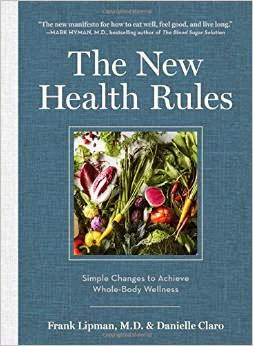
Certainly, people need to be active, and we should encourage exercise and physically active lifestyles. Many Americans are too sedentary, and our school system based on "sit and get" while preparing for standardized tests is not helping at all. However, food choices and eating habits are far more significant in successful weight management, and there are some simple lessons. Michael Pollan said it best when he advised people to simply: "Eat real food, not too much, mostly plants." And, this year, people who are resolving to be healthier have a new resource in Dr. Frank Lipman's The New Health Rules.
- Don’t fear fat. Coconut oil, avocados, and meat from grass- fed animals all contain healthy natural fats, which your brain and body need to function optimally.
- If you eat cows, make sure they eat grass. In other words, know what went into the meat before it goes into you!
- Get 15 minutes of sunshine a day. You’ll boost vitamin D, mood and immunity in minutes.
- Stop this egg-white omelet nonsense. Yolks are packed with satiating nutrients so put them back on your plate and feel fuller longer.
- Curb sugar cravings. Eating less sugar reduces your risk of heart disease, cancer, and diabetes so the sooner you taper off, the sooner your risk will drop.
- If you learn only one yoga pose…….let it be supta badha konasana.
- Break up with bread.…….and over a 100 more tips
Monday, January 5, 2015
Maintain, Don't Gain in only 7 Minutes
As part of my school's health and wellness campaign, I joined the "Maintain, Don't Gain" program to motivate me to not give in to excess during the winter holidays. That's not an easy task around my house because my wife is a former professional pastry chef who has a simple catering business during the holidays. Starting around Thanksgiving, we will have roughly two hundred dozen cookies in the freezer. And, of course, working in a school, there are countless parties and treats around school and in the community that are specifically designed to derail our healthy efforts.
Additionally, I've found that my workout routine - which is effective and routine for much of the year - can really take a hit during the midpoint of the school year. I can go from 3-4 days of cardio and weights down to one, usually only on Saturdays. I am certainly an afternoon exerciser. The mornings are reserved for waking up with the coffee and paper. And because we start school at 7 am, there is simply no way I am going to get the workout done early. Normally, I will run for 25 minutes outside, or work out with weights for at least that long.
So, I was intrigued when I read about "The Seven Minute Workout."
This high-intensity, interval workout featured on the New York Times blog might actually be all it's cracked up to be. Anyone can spare seven minutes, right? There have been times that I come home and want to crash on the couch with a beer and the news, but I've been able to commit seven minutes of intense exercise before that. And, it's easy to do with this really cool workout app. I've even added to it when I have the time ... and the energy. So, I'll do a 9-minute workout. And sometimes a few minutes of weights afterward, or even ten minutes on the bike in the basement. So, if you are hoping to keep yourself in check this winter, consider this workout:

Additionally, I've found that my workout routine - which is effective and routine for much of the year - can really take a hit during the midpoint of the school year. I can go from 3-4 days of cardio and weights down to one, usually only on Saturdays. I am certainly an afternoon exerciser. The mornings are reserved for waking up with the coffee and paper. And because we start school at 7 am, there is simply no way I am going to get the workout done early. Normally, I will run for 25 minutes outside, or work out with weights for at least that long.
So, I was intrigued when I read about "The Seven Minute Workout."
This high-intensity, interval workout featured on the New York Times blog might actually be all it's cracked up to be. Anyone can spare seven minutes, right? There have been times that I come home and want to crash on the couch with a beer and the news, but I've been able to commit seven minutes of intense exercise before that. And, it's easy to do with this really cool workout app. I've even added to it when I have the time ... and the energy. So, I'll do a 9-minute workout. And sometimes a few minutes of weights afterward, or even ten minutes on the bike in the basement. So, if you are hoping to keep yourself in check this winter, consider this workout:
Sunday, January 4, 2015
Live the Life You Have Imagined
If one advances confidently in the
direction of his dreams, and endeavors to live the life which he has
imagined, he will meet with a success unexpected in common hours. - Henry David Thoreau
With those words, transcendentalist Henry David Thoreau outlines for us how to live. I've shared these thoughts with my students many times, and I've written them in my journals numerous times as well ... and now, right here right now in 2015, it is time for me to start living them. Thoreau's words encapsulate just a bit of inspiration that has inspired a thousand self-help books, most notably the original tome, Norman Vincent Peale's The Power of Positive Thinking. But none of those works have really expanded upon the simple significance of Thoreau's basic advice - "live the life you have imagined."
While I am proud of my life's work to the age of forty-five, and I am quite content with my hard work and success and current position in life, I am not, alas, "living the life I have imagined." I am, of course, in a good spot professionally, working in the best of all positions. My job as a high school administrator still allows me the opportunity to teach one class, which is a privilege many in administration must give up to pursue the leadership opportunity. And, I am blessed to still work with students directly as a GT Coordinator and sponsor of our Youth Advisory Board. Additionally, I work with great people in areas of tech support, staff development, and school culture. I really couldn't be happier with my job.
That said, there's more I've always planned to do.
For many years, I've told people that when I grow up "I want to be David Brooks of the New York Times." That, or perhaps, Malcolm Gladwell of the New Yorker and "Outliers" fame. Basically, being a writer and speaker and cultural critic is my dream job. I've always enjoyed researching and writing and, basically, passing on information to others. That's why I am a teacher ... and I am fairly confident that I am quite good at what I do. But, for as long as I've been teaching, I've always been waiting for that moment when the writing/speaking career develops out of something I've written. For many years, I mistakenly thought myself a novelist. It took a friend who really is a novelist (though shockingly unpublished as of yet) to point out that I should be focusing on the non-fiction success that I've had and pursue that option. Really, duh. It was a surprising lack of self awareness on my part.
Yet, I've never followed through on any of the big ideas I have for writing, and I spend more time reading people I admire and journaling about potential books than I do actually writing them.Granted, I do a fair amount of writing on several blogs, and I am regularly posting and passing on links and thoughts via Twitter and Facebook. This blog, A Teacher's View, was my original idea for my forum as a cultural critic, and I also began two others. Mazenglish is my blog which is supposed to focus primarily on my knowledge, skills, and insight as an English teacher. The term refers to the unique qualities of my class which have made it popular and successful for so many years. After that, I started the blog Views on the Village as my Colorado blog which was going to be an eye on my community. Originally, I thought it would be focused on politics and community, and then I expanded it into culture, hoping to use it as list of my favorites and suggestions about the world in which I live. Despite my desire to write these blogs, and use them to create an audience for my work, I have not adequately maintained them, or developed an efficient system for doing so. Yet, I am not ready to abandon them, and I have hope that they can become more significant.
So, ....
Yeah, so.
So, I like my job, and I can't complain about my life, but I had a different vision of success in my life, and my daily-ness does not look like the life I had imagined. And, I will not be truly happy or content or satisfied until I am doing all that I have planned and am capable of doing. There are articles and books to be written, presentations to be crafted and made, products to be produced, businesses to develop, and refinements to my daily living experience to be crafted. And, 2015 should not end with the resigned disappointment and acceptance of "adequate" that has been the conclusion of previous years. And, I am hoping that this blog keeps me focused and honest and on track. Last year I turned forty-four, and it seemed like a convenient marking point for my next phase. I'd graduated college at 22, I'd achieved career success in public education at 44, and it was time to begin "Act III." Act III is a writing career and the role of "independent scholar" and public commentator.
So, here's to Act III. Here's to more writing and "advancing confidently ... to live the life I have imagined."
Friday, December 26, 2014
Is Teaching Actually a Blue-Collar Job?
I've never really complained about the money I make teaching - and I certainly don't agree that teachers should be making millions like pop stars and pro athletes. That said, I don't doubt that, like most teachers, I don't make nearly as much money as all the other college educated professions of people I know. Looking at pay scales from across the country, I realize that David Cook of the FreePress may be right - based on simple compensation and earning power, "Teaching is now a blue-collar job."
Teachers are not poorly paid, especially for ten months of work, but they are not necessarily compensated in a manner commensurate with their outlays in terms of education and credentialing. In most places, teachers don't make much more than people who work in skilled labor. As Cook points out, teachers are making roughly the same as electricians and masons. And, that's not necessarily an insult or out of kilter with the economy, but it is off base with what sort of money must be invested in the job training.
And, as readers of this blog will recall, I am a strong supporter of skilled labor and career education. In places like Colorado and South Dakota, laborers in the energy industry can pull down six figures. Additionally, the value of an education is increasingly suspect, so the value offered by a middle school language arts teacher may not be instantly quantifiable in terms comparable to a laborer or a accountant. That said, this sort of information may be useful advice for people considering education. And it may just be reason enough to encourage our best brightest - "Don't become a teacher."
Teachers are not poorly paid, especially for ten months of work, but they are not necessarily compensated in a manner commensurate with their outlays in terms of education and credentialing. In most places, teachers don't make much more than people who work in skilled labor. As Cook points out, teachers are making roughly the same as electricians and masons. And, that's not necessarily an insult or out of kilter with the economy, but it is off base with what sort of money must be invested in the job training.
And, as readers of this blog will recall, I am a strong supporter of skilled labor and career education. In places like Colorado and South Dakota, laborers in the energy industry can pull down six figures. Additionally, the value of an education is increasingly suspect, so the value offered by a middle school language arts teacher may not be instantly quantifiable in terms comparable to a laborer or a accountant. That said, this sort of information may be useful advice for people considering education. And it may just be reason enough to encourage our best brightest - "Don't become a teacher."
Wednesday, December 24, 2014
Anya Kamenetz Puts Standardized Testing to "The Test"
One of the strongest voices in the world of education writing - or really many issues facing young people pondering their future - is Anya Kamenetz, who has published several books of non-fiction and has written for NPR, Fast Company, and others. Kamenetz is now turning her attention to the complicated world of education accountability and standardized testing. As an education writer and parent, Kamenetz was looking to investigate the state of public education, but was surprised to discover how every conversation was completely consumed by discussions of testing. Thus, with her curious and insightful mind, she set out to answer "What Are Education Tests for Anyway?" She offers a bit of a primer on what tests are out there, and what they are supposed to mean.
Did that trigger scary memories of the 10th grade? Or are you just curious how you'll measure up?
If the answer is "C: Either of the above," keep reading. Tests have existed throughout the history of education. Today they're being used more than ever before — but not necessarily as designed.
Different types of tests are best for different purposes. Some help students learn better. Some are there to sort individuals. Others help us understand how a whole population is doing.
But these types of tests are easily confused, and more easily misused. As the U.S. engages in another debate over how — and how much — we test kids, it might be helpful to do a little anatomy of assessment, or a taxonomy of tests.
Her initial article for NPR has taken on a life of its own, and now Kamenetz is offer a much more comprehensive look at the testing issue in her soon-to-be released The Test: Why Our Schools are Obsessed with Standardized Testing, But You Don't Have to Be. While I have not read this work, I am looking forward to Kamenetz's observations and analyses, for I have appreciated all that I've read by her before. Let's hope she keeps the keenly critical eye on the issue of how obtrusive, and ultimately inconclusive, all this testing has become.
Did that trigger scary memories of the 10th grade? Or are you just curious how you'll measure up?
If the answer is "C: Either of the above," keep reading. Tests have existed throughout the history of education. Today they're being used more than ever before — but not necessarily as designed.
Different types of tests are best for different purposes. Some help students learn better. Some are there to sort individuals. Others help us understand how a whole population is doing.
But these types of tests are easily confused, and more easily misused. As the U.S. engages in another debate over how — and how much — we test kids, it might be helpful to do a little anatomy of assessment, or a taxonomy of tests.
Her initial article for NPR has taken on a life of its own, and now Kamenetz is offer a much more comprehensive look at the testing issue in her soon-to-be released The Test: Why Our Schools are Obsessed with Standardized Testing, But You Don't Have to Be. While I have not read this work, I am looking forward to Kamenetz's observations and analyses, for I have appreciated all that I've read by her before. Let's hope she keeps the keenly critical eye on the issue of how obtrusive, and ultimately inconclusive, all this testing has become.
Tuesday, December 23, 2014
Keeping Teachers, Getting Rid of Teachers, Fixing Schools, and more ...
"Fixing schools" and improving public education is an inevitably complex topic on which everyone has an opinion and a comment. The value of the entire conversation, of course, is a bit dubious in that it begs the question of whether schools actually need to be fixed. That said, there are plenty of ideas out there. In the past couple years, we have been offered various tomes about improving the education system, and the majority of them center on creating better teachers. Joanne Jacobs recently spotlighted a somewhat questionable review of these works. The review in question from Jonathon Zimmerman for the New York Review of Books asked, rather cynically, "Why Is American Teaching So Bad?"
Dana Goldstein in The Teacher Wars, her impressive new history of teachers in the United States ... makes clear, Americans have simultaneously lauded teachers’ moral virtue and deplored their lack of adequate knowledge and skills. But debate over teaching has shifted sharply over the past two decades, when public education became much more narrowly academic in focus and purpose
What is the matter with teacher preparation and how can we make it better? Elizabeth Green takes on both questions in her eloquent new book, Building a Better Teacher, which manages to be depressing and hopeful at the same time. Like Dana Goldstein, Green was a Spencer Fellow at the Columbia Journalism School; if nothing else, the current educational crisis has produced a new group of skilled and knowledgeable reporters on education. Green’s thesis is simple: most teachers are never actually taught how to teach. After encountering a very thin introduction to the theory and practice of teaching at education schools, they’re sent into classrooms to learn on the job.
Of course, our best teachers can and do make a difference in the lives of our least privileged children; you can see Keizer doing that, in small ways, in Getting Schooled, his fine book. Yet every piece of credible social science confirms that, notwithstanding such efforts, schools cannot overcome the crippling effects of poverty. Telling teachers that they can represents yet another insult to their intelligence, all in the guise of bucking them up. Ditto for the perennial promotions of digital technologies, which promise to “revolutionize” teaching very soon. Similar claims greeted film projectors, radio, and television in their own times; in 1922, for example, Thomas Edison predicted that motion pictures would replace textbooks within a few short years.
In looking at the title of his review, it may appear that Zimmerman has bought into the myths of "failing public schools." He certainly offers some reasonably commentary and criticism, and he obviously thinks these recent bits of reporting on some successful schools may offer the key to "fixing public schools." Overall, Zimmerman's reporting on these recent education books offers some valuable food for thought, if not an actual solution. That said, the discussion of public education must go on, and scrutiny of teaching, sadly, will be the primary, and often only, focus. That said, there are still voices out there offering caveats to the "teacher question." As freelance education writer Nick Morrison posits in Forbes, "The Problem Isn't Getting Rid of Teachers, It's Keeping Them."
Dana Goldstein in The Teacher Wars, her impressive new history of teachers in the United States ... makes clear, Americans have simultaneously lauded teachers’ moral virtue and deplored their lack of adequate knowledge and skills. But debate over teaching has shifted sharply over the past two decades, when public education became much more narrowly academic in focus and purpose
What is the matter with teacher preparation and how can we make it better? Elizabeth Green takes on both questions in her eloquent new book, Building a Better Teacher, which manages to be depressing and hopeful at the same time. Like Dana Goldstein, Green was a Spencer Fellow at the Columbia Journalism School; if nothing else, the current educational crisis has produced a new group of skilled and knowledgeable reporters on education. Green’s thesis is simple: most teachers are never actually taught how to teach. After encountering a very thin introduction to the theory and practice of teaching at education schools, they’re sent into classrooms to learn on the job.
Of course, our best teachers can and do make a difference in the lives of our least privileged children; you can see Keizer doing that, in small ways, in Getting Schooled, his fine book. Yet every piece of credible social science confirms that, notwithstanding such efforts, schools cannot overcome the crippling effects of poverty. Telling teachers that they can represents yet another insult to their intelligence, all in the guise of bucking them up. Ditto for the perennial promotions of digital technologies, which promise to “revolutionize” teaching very soon. Similar claims greeted film projectors, radio, and television in their own times; in 1922, for example, Thomas Edison predicted that motion pictures would replace textbooks within a few short years.
In looking at the title of his review, it may appear that Zimmerman has bought into the myths of "failing public schools." He certainly offers some reasonably commentary and criticism, and he obviously thinks these recent bits of reporting on some successful schools may offer the key to "fixing public schools." Overall, Zimmerman's reporting on these recent education books offers some valuable food for thought, if not an actual solution. That said, the discussion of public education must go on, and scrutiny of teaching, sadly, will be the primary, and often only, focus. That said, there are still voices out there offering caveats to the "teacher question." As freelance education writer Nick Morrison posits in Forbes, "The Problem Isn't Getting Rid of Teachers, It's Keeping Them."
Thursday, December 11, 2014
Best-selling YA Author Jay Asher Brings Anti-Bullying Tour to Colorado
Bullying may always be with us - but that doesn't mean we can't try to do something to lessen it. And, that's the approach being taken by best-selling YA author Jay Asher, whose novel Thirteen Reasons Why has engaged millions of teens nationwide with discussions of bullying, harassment, depression, and suicide. In response to the huge outpouring of support for and interest in his novel, Asher has been on a "50 States Against Bullying Tour," sponsored by his publisher, which includes visits to fifty different high schools across the country. Recently, Asher visited Cherry Creek High School in Colorado and delivered his message of hope and positive behavior to more than a thousand students. Here's my coverage of the event.
The presentation at Cherry Creek was an entertaining event, as Jay Asher is an engaging speaker who can connect with large groups of teens in person as well as with the written word. His speech, which is obviously about a serious and potentially somber matter, is surprisingly light and uplifting as he constantly reinforces to the audience a message of hope. As a speaker, he has an easy-going manner, punctuated with some self-deprecating humor that enables him to deal with a difficult topic in a positive and engaging way. Asher deftly balanced his serious commentary with amusing anecdotes that were both thoughtful and amusing.
The book and tour have not been without controversy, which isn’t surprising considering the subject. Sadly, Asher noted, “Some communities live in silence” about issues like bullying and depression and suicide because they make people uncomfortable. And that, Asher believes, is a huge mistake. Not talking about serious issues is not the answer for how to deal with them, and his tour is a response to that instinct. In that regard, Asher spoke positively about the opportunity to come speak at Cherry Creek, after noting his book had been banned and challenged in numerous places. In fact, he has even been un-invited from some schools after their communities learned more about the book’s plot. “It’s a testament to your school that I’m speaking to you now,” he told the students. “Your school is telling you that they care about you.”
Jay believes that ultimately Hannah’s lesson, or message, would be that “I want you to think about how to treat people from now on.” That’s the message he’s sharing with students, and he believes he’s making a difference with young people like the reader who told him after reading the book, “It just makes me want to be wonderful to everyone.” That would be a pretty meaningful legacy.
Ultimately, this event is another important step in educating our youth.
The presentation at Cherry Creek was an entertaining event, as Jay Asher is an engaging speaker who can connect with large groups of teens in person as well as with the written word. His speech, which is obviously about a serious and potentially somber matter, is surprisingly light and uplifting as he constantly reinforces to the audience a message of hope. As a speaker, he has an easy-going manner, punctuated with some self-deprecating humor that enables him to deal with a difficult topic in a positive and engaging way. Asher deftly balanced his serious commentary with amusing anecdotes that were both thoughtful and amusing.
The book and tour have not been without controversy, which isn’t surprising considering the subject. Sadly, Asher noted, “Some communities live in silence” about issues like bullying and depression and suicide because they make people uncomfortable. And that, Asher believes, is a huge mistake. Not talking about serious issues is not the answer for how to deal with them, and his tour is a response to that instinct. In that regard, Asher spoke positively about the opportunity to come speak at Cherry Creek, after noting his book had been banned and challenged in numerous places. In fact, he has even been un-invited from some schools after their communities learned more about the book’s plot. “It’s a testament to your school that I’m speaking to you now,” he told the students. “Your school is telling you that they care about you.”
Jay believes that ultimately Hannah’s lesson, or message, would be that “I want you to think about how to treat people from now on.” That’s the message he’s sharing with students, and he believes he’s making a difference with young people like the reader who told him after reading the book, “It just makes me want to be wonderful to everyone.” That would be a pretty meaningful legacy.
Ultimately, this event is another important step in educating our youth.
Wednesday, December 10, 2014
Fat Doesn't Make You Fat - And Weight Isn't about Counting Calories
We all know people who can eat what they want and not gain weight. And we know some people seem to put on weight by just looking at dessert. The amount of misinformation about health and weight is as staggering as the number of calories in a Carl's Jr. burger. And until we get some legitimate honesty about weight and the role played by sugar and carbohydrates, we will never begin to get a handle on Americans' expanding waistlines.
The biggest myth in the "obesity crisis" is the idea that "fat" makes people fat. That's been a myth perpetuated on the American public for more than fifty years now. And, interestingly, that fifty years coincides with the greatest increase in American's weight and health problems. The reality seems to be that the low-fat and no-fat craze - initially fueled by the the government and the American Heart Association - is probably the most significant cause of increasing weight problems. That's why "Everything you think you know about fatty foods might be wrong."
The low-fat and zero-calorie hype is directly correlated with weight gain. For, as producers removed fat from foods, they actually increased the sugar. The rise in processed foods with a lot of sugar and empty carbohydrates is the link to weight gain.
The biggest myth in the "obesity crisis" is the idea that "fat" makes people fat. That's been a myth perpetuated on the American public for more than fifty years now. And, interestingly, that fifty years coincides with the greatest increase in American's weight and health problems. The reality seems to be that the low-fat and no-fat craze - initially fueled by the the government and the American Heart Association - is probably the most significant cause of increasing weight problems. That's why "Everything you think you know about fatty foods might be wrong."
The low-fat and zero-calorie hype is directly correlated with weight gain. For, as producers removed fat from foods, they actually increased the sugar. The rise in processed foods with a lot of sugar and empty carbohydrates is the link to weight gain.
Monday, December 8, 2014
Charli XCX Revitalizing Music Industry by Making Music Her Way
The future of the music industry seems to be in the hands of numerous gifted young women who are making music on their terms and setting their own standards for success. Everyone knows the names Taylor Swift and Lourde, but we can add Iggy and Charli to the mix. Notably, British musician, singer, songwriter, Charli XCX is making a name for herself by writing great hit songs, collaborating with others like Iggy Azaela, and occasionally just giving her hit songs away. This week Time Magazine profiles Charlie as the "Riot Girl Hitmaker" who is raging against the pop music machine and improving the music industry in the process. It's just an exciting time to listen to music, especially with a young women who claims to be "very judgmental of the music industry." Charli is innovative and progressive, producing catchy rock anthems like "I Love It" as will as hip-hop tunes like "Fancy" and the pop radio friendly "Boom, Clap." On her most recent album, Sucker, she went for a feisty punk sound, which Time calls "a middle finger covered in Sour Patch dust." That sounds pretty good to me.
Friday, December 5, 2014
Is Education Reform Holding High Achievers Back?
In the push to close the achievement gap and ensure equal access and opportunity to all students, the community that supports advanced learning has legitimate fears that the needs of America's highest achieving students are being ignored. The basic belief around "Gifted & Talented," or advanced learners, is that "they will be all right." However, scholar and educator Charles Finn is not so sure. In fact, he is deeply concerned that the country's highest achieving students are being harmed by the recent attention the Department of Education and the Office of Civil Rights (OCR) has put on "access to advanced classes."
To be sure, schools and communities must take measures to guarantee access and opportunity. However, the push must not come at the cost of slowing schools, classes, and instruction down in order to allow all students to catch up.
Five points deserve attention.
First, in going after practices that separate kids on the basis of achievement, OCR will confound and cripple every educator’s favorite reform du jour, “differentiated instruction.” Because in the real world of middle schools with 200 sixth-graders, differentiation doesn’t mean true individualization. It means various forms of ability grouping.
Second, the U.S. is already having huge trouble paying attention to high achievers (some say “gifted and talented”) when we’re preoccupied with low achievers and dire schools. Anything that discourages such attention is bad for American economic growth and competitiveness, not to mention unfair to kids who are ready, willing, and able to soar but have trouble getting the teacher’s attention. (Disparate impact at the expense of high achievers and smart kids is apparently just fine with OCR.)
Third, some forms of “tracking” are good for poor kids, minority kids, and low achievers seeking a path to upward mobility. If anything, we need more of it in high-poverty schools. As Tom Loveless of the Brookings Institution has shown, those are the schools least likely to give their high achievers (who are also poor and minority kids) chances to accelerate and to learn with other high achievers.
At the high school level, “voc ed” has a bad name, and old-style tracking led to a lot of dead ends. But what about high-quality career and technical education for young people who want a good job but don’t necessarily want to go to a conventional college—or who haven’t been educated well enough in the early and middle grades to thrive in an AP classroom? Aren’t they going to get further if they have access to classes designed for them? At the very least, the choice of such classes?
Indeed, if OCR (and the Education Department more broadly) were as interested in giving people school choices as in deciding what’s good for them, I’d be a lot less apprehensive. But they’re not. They’ve been throwing monkey wrenches into all sorts of choice programs and policies because they think they know better where people belong.
Fourth, of course we want to see more minority kids succeed in AP classes and International Baccalaureate (IB) programs, just as we want to see more boys succeed in English and girls in physics. Insofar as the education system is capable of achieving these goals, however, it needs to strive comprehensively from kindergarten (or preschool) onward. Swatting high schools because elementary schools didn’t send them an ethnically balanced collection of kids ready for AP and IB does not accomplish any educationally desirable end.
Fifth, consider the likelihood that OCR’s threats may have the unintended effect of encouraging white and Asian families to decamp (more than they’ve already done) for predominantly white and Asian schools. Then, of course, there won’t be racial gaps in access to educational resources—because kids of other races won’t even be present.
To be sure, schools and communities must take measures to guarantee access and opportunity. However, the push must not come at the cost of slowing schools, classes, and instruction down in order to allow all students to catch up.
Tuesday, December 2, 2014
Jovan Mays - A Conversation on Race
Sometimes it takes the poets, speaking in verse and imagary, to help us truly understand the world around us. To that end, we have some powerful words from Jovan Mays, the Poet Laureate of the city of Aurora, Colorado.
"On these days, we are all Black boys ..."
It's time to stop ... and think.
Saturday, November 29, 2014
Colorado Students Refuse State Standardized Tests
The school reform movement ran into a bit of a snag earlier this month in Colorado, at least in terms of its standardized-test emphasis and test-based accountability for schools. As one of the states that adopted Common Core State Standards and aligned with the PARCC testing consortium to assess "readiness" in the areas of math and language arts, Colorado is also in the process of implementing state standardized assessments in science and social studies at the elementary, middle, and high school levels. These assessments are not related to Common Core or PARCC, but are related to Colorado Academic Standards, which cover eleven content areas. These tests, which are being called CMAS - Colorado Measures of Academic Success, gained news earlier in the year when "students performed poorly" on the new assessments. Some argued the low scores were evidence of a need for the "more rigorous" standards, while others argued against the authenticity of the scores for a variety of reasons including decreased prep time and the new style of computerized assessment from Pearson. Thus, the battle over standardized assessments for rating schools, teachers, and students has taken center stage in the Rocky Mountain state.
And, now some parents and students are pushing back.
Thousands of high school seniors refused to participate in the high school version of CMAS, which was scheduled for the fall of senior year and required two days of testing. The movement seems to have snowballed around the state, as word spread about the idea of "opting out." Several education advocacy groups have promoted the idea of parent refusal, arguing that students are "more than a test score" and that they should "choose to refuse." In the progressive town of Boulder, students not only refused to participate, but also staged a protest on one of the coldest days of the year, explaining their reasons for "opting out":
Across the state, the number of parent refusals was highly noticeable. In two of the highest performing schools in the state (and, in fact, in the nation), Fairview High School and Cherry Creek High School, hardly any students took the test, as participation was well below five percent. These numbers weren't matched at most schools, but numerous school districts saw surprisingly low compliance with the state mandated tests. The reality is that parents don't have a legal right to "opt out" of tests, but any parent has a legal right to "refuse participation" for any aspect of their children's education. Thus, parents can refuse to allow their child to read a specific book or attend a required assembly or even to be immunized. And, many students who feel like they have been over-tested for their entire school career are beginning to ask if "standardized tests should still be standard."
With the coming PARCC assessments in the spring, the issue of challenging standardized assessments in public education will continue to generate controversy.
And, now some parents and students are pushing back.
Thousands of high school seniors refused to participate in the high school version of CMAS, which was scheduled for the fall of senior year and required two days of testing. The movement seems to have snowballed around the state, as word spread about the idea of "opting out." Several education advocacy groups have promoted the idea of parent refusal, arguing that students are "more than a test score" and that they should "choose to refuse." In the progressive town of Boulder, students not only refused to participate, but also staged a protest on one of the coldest days of the year, explaining their reasons for "opting out":
Across the state, the number of parent refusals was highly noticeable. In two of the highest performing schools in the state (and, in fact, in the nation), Fairview High School and Cherry Creek High School, hardly any students took the test, as participation was well below five percent. These numbers weren't matched at most schools, but numerous school districts saw surprisingly low compliance with the state mandated tests. The reality is that parents don't have a legal right to "opt out" of tests, but any parent has a legal right to "refuse participation" for any aspect of their children's education. Thus, parents can refuse to allow their child to read a specific book or attend a required assembly or even to be immunized. And, many students who feel like they have been over-tested for their entire school career are beginning to ask if "standardized tests should still be standard."
With the coming PARCC assessments in the spring, the issue of challenging standardized assessments in public education will continue to generate controversy.
Sunday, November 16, 2014
What Students Need to Hear
What to do about kids who don't achieve in school?
Every school reformer has a general big idea or agenda to fix the problem of struggling schools and struggling students. Is it standards or poverty or teachers or tenure or testing or … what? Occasionally, it seems like they just need a good talking to, explaining the "truth" to them in a way that will shake them out of the slumber that leads to sub-par performance. A pep talk should do it. And, that's the essence of a video making the rounds by English teacher Chase Mielke who as some advice on "What Students Really Need to Hear."
Basically, they need to work harder.
There's been a lot of writing lately about how success for kids is really about grit and perseverence. Paul Tough wrote about it in "How Children Succeed" and Charles Duhigg did in "The Power of Habit." It's what Geoffery Canada promotes with the Harlem Children's Zone. It's really all about character education, and many reformers will argue that truly effective, or great, teachers will be able to get this message through to kids.
The real sadness is the endless stream of kids who can't find it in themselves or their lives. So, as Chase says, we simply have to be there each day, patiently, helping them develop it.
Every school reformer has a general big idea or agenda to fix the problem of struggling schools and struggling students. Is it standards or poverty or teachers or tenure or testing or … what? Occasionally, it seems like they just need a good talking to, explaining the "truth" to them in a way that will shake them out of the slumber that leads to sub-par performance. A pep talk should do it. And, that's the essence of a video making the rounds by English teacher Chase Mielke who as some advice on "What Students Really Need to Hear."
Basically, they need to work harder.
There's been a lot of writing lately about how success for kids is really about grit and perseverence. Paul Tough wrote about it in "How Children Succeed" and Charles Duhigg did in "The Power of Habit." It's what Geoffery Canada promotes with the Harlem Children's Zone. It's really all about character education, and many reformers will argue that truly effective, or great, teachers will be able to get this message through to kids.
The real sadness is the endless stream of kids who can't find it in themselves or their lives. So, as Chase says, we simply have to be there each day, patiently, helping them develop it.
Subscribe to:
Posts (Atom)